
Healing was never meant to be solitary. We were meant to find one another, to build safety together, and to remember what it feels like to belong.
But as the work evolved, I began to realize that Riveted Hearts was only part of the truth. Every time I tried to explain what this project really was—what it meant beyond the objects themselves—I found myself circling back to something larger. I wasn’t just carving hearts or restoring furniture or working with wood as a form of healing. I was building a place. A refuge. And at the center of that refuge were two groups who had always been quietly intertwined in my mind: survivors and wolves.
This wasn’t a branding decision so much as a reckoning. The name didn’t change because the mission shifted; it changed because the mission finally had the space to fully reveal itself. Riveted Hearts had always been about survival and repair, but survival in isolation is not the same thing as healing. Healing requires safety, and safety—real safety—is rarely created alone. It is built through relationship, through shared presence, through knowing that you are not the only one watching the edges of the room. It is built in packs.
Wolves have been misunderstood for as long as I can remember. They are framed as dangerous, aggressive, something to fear or eliminate, when in reality they are deeply relational animals who depend on cooperation, communication, and care to survive. Wolves live within families, protect their young and vulnerable, and rely on the strength of the collective rather than dominance or control. A wolf alone is exposed. A wolf in a pack is regulated, purposeful, and grounded. When I learned more about wolves, I couldn’t ignore how closely their reality mirrored the experience of survivors.
Survivors, like wolves, are often judged by narratives written by someone else. We are asked why we stayed, why we didn’t see it sooner, why we didn’t fight harder, why we didn’t leave. We are reduced to moments instead of understood as whole beings shaped by prolonged pressure, manipulation, fear, and love that became something else over time. Abuse isolates by design. It fractures trust, severs community, and teaches the nervous system that being alone is safer than being seen. But isolation is not where healing happens. Healing happens when the body remembers what it feels like to exist without constant vigilance, when safety is experienced rather than explained.
I am a survivor myself. My story is not something I share for shock or sympathy, but because it is inseparable from why this refuge exists at all. I lived for years inside a relationship that taught me to endure rather than feel, to adapt rather than resist, to disappear in small ways in order to keep the peace. I learned how to survive environments that rewarded silence and punished truth, and for a long time I believed that surviving was the same as living. It wasn’t until everything fell apart that I understood how deeply disconnected I had become from my own sense of safety, agency, and belonging.
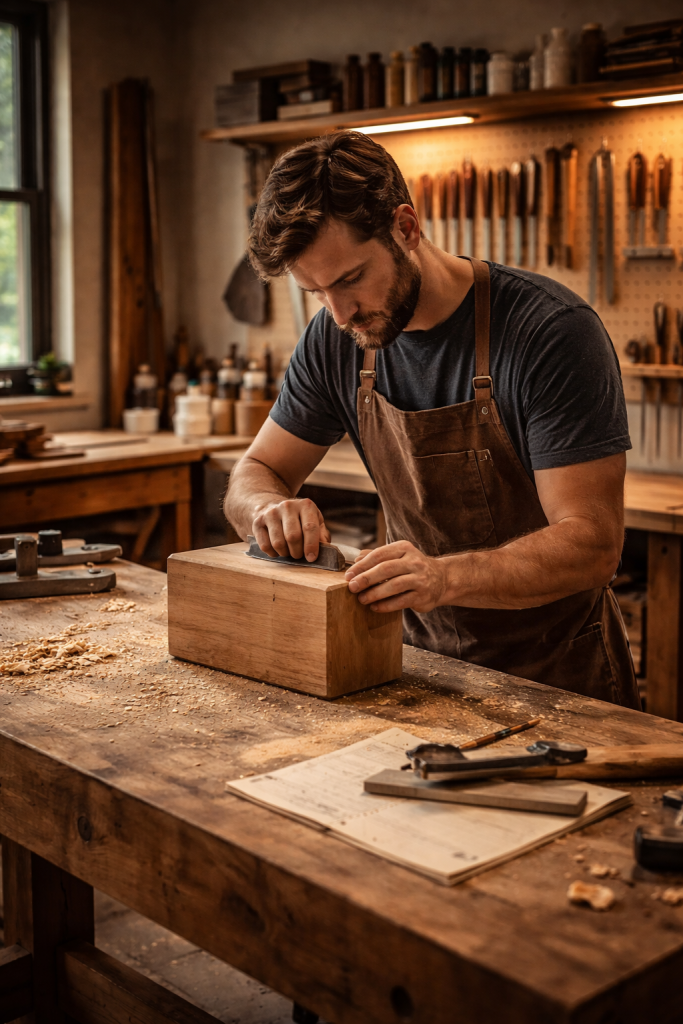
Woodworking found me during that unraveling. Working with my hands quieted something in my body that words never could. Repairing broken furniture, carving shapes from raw wood, sanding and shaping and joining pieces back together taught me that damage didn’t have to be erased to be meaningful. The wood remembered what it had been through, and somehow that made it stronger, not weaker. Riveted Hearts was born from that realization, but over time it became clear that the work couldn’t stop at objects. The same principles applied to people, to animals, to places that had been harmed and needed care rather than control.
The wolves came into this vision naturally, almost inevitably. Watching wolves interact—how they check in with one another, how they respect boundaries, how they rest without fear when they feel safe—does something profound to the human nervous system. It reminds us of patterns older than trauma, older than language. It shows us that strength does not have to be loud, that protection does not require domination, and that belonging does not require perfection. In the presence of wolves, something in the body softens. Something remembers.
That is why this is a refuge, not a program. A refuge is a place where nothing is demanded of you. It is a space where rest is allowed, where learning happens without evaluation, and where healing is not rushed or measured by productivity. Riveted Hearts Wolf Pack Refuge exists to create that kind of space—for wolves who need sanctuary, and for survivors who need safety without explanation. It is a place where craft, care, education, and connection come together slowly and intentionally, honoring the pace of nervous systems that have learned to survive by staying alert.
The name Riveted Hearts Wolf Pack Refuge holds the full truth of what this work has always been. Riveted Hearts speaks to repair that does not deny history. Wolf Pack speaks to the reality that no one heals alone. Refuge speaks to the commitment to safety, dignity, and presence over performance. This name does not erase the past; it clarifies it. It allows the mission to stand fully in the open, honest about where it came from and where it is going.
If you have ever felt misunderstood, isolated, or forced to become smaller in order to survive, this work is for you. If you have ever been told you were too much, too quiet, too damaged, or too wild, you are not alone. Healing was never meant to be solitary. We were meant to find one another, to build safety together, and to remember what it feels like to belong.
Welcome to the pack
For a long time, I believed Riveted Hearts was the final name. It carried the weight of the work I was doing with my hands—repair, carving, joining, and making something whole again without pretending it had never been broken. Rivets made sense to me because they don’t hide damage; they acknowledge it and strengthen it. The hearts I carved were never about perfection. They were about endurance, about learning how to live with visible joins, about honoring the places where pressure had already been applied and survived. For years, that felt complete.
But as the work evolved, I began to realize that Riveted Hearts was only part of the truth. Every time I tried to explain what this project really was—what it meant beyond the objects themselves—I found myself circling back to something larger. I wasn’t just carving hearts or restoring furniture or working with wood as a form of healing. I was building a place. A refuge. And at the center of that refuge were two groups who had always been quietly intertwined in my mind: survivors and wolves.
This wasn’t a branding decision so much as a reckoning. The name didn’t change because the mission shifted; it changed because the mission finally had the space to fully reveal itself. Riveted Hearts had always been about survival and repair, but survival in isolation is not the same thing as healing. Healing requires safety, and safety—real safety—is rarely created alone. It is built through relationship, through shared presence, through knowing that you are not the only one watching the edges of the room. It is built in packs.
Wolves have been misunderstood for as long as I can remember. They are framed as dangerous, aggressive, something to fear or eliminate, when in reality they are deeply relational animals who depend on cooperation, communication, and care to survive. Wolves live within families, protect their young and vulnerable, and rely on the strength of the collective rather than dominance or control. A wolf alone is exposed. A wolf in a pack is regulated, purposeful, and grounded. When I learned more about wolves, I couldn’t ignore how closely their reality mirrored the experience of survivors.
Survivors, like wolves, are often judged by narratives written by someone else. We are asked why we stayed, why we didn’t see it sooner, why we didn’t fight harder, why we didn’t leave. We are reduced to moments instead of understood as whole beings shaped by prolonged pressure, manipulation, fear, and love that became something else over time. Abuse isolates by design. It fractures trust, severs community, and teaches the nervous system that being alone is safer than being seen. But isolation is not where healing happens. Healing happens when the body remembers what it feels like to exist without constant vigilance, when safety is experienced rather than explained.
I am a survivor myself. My story is not something I share for shock or sympathy, but because it is inseparable from why this refuge exists at all. I lived for years inside a relationship that taught me to endure rather than feel, to adapt rather than resist, to disappear in small ways in order to keep the peace. I learned how to survive environments that rewarded silence and punished truth, and for a long time I believed that surviving was the same as living. It wasn’t until everything fell apart that I understood how deeply disconnected I had become from my own sense of safety, agency, and belonging.
Woodworking found me during that unraveling. Working with my hands quieted something in my body that words never could. Repairing broken furniture, carving shapes from raw wood, sanding and shaping and joining pieces back together taught me that damage didn’t have to be erased to be meaningful. The wood remembered what it had been through, and somehow that made it stronger, not weaker. Riveted Hearts was born from that realization, but over time it became clear that the work couldn’t stop at objects. The same principles applied to people, to animals, to places that had been harmed and needed care rather than control.
The wolves came into this vision naturally, almost inevitably. Watching wolves interact—how they check in with one another, how they respect boundaries, how they rest without fear when they feel safe—does something profound to the human nervous system. It reminds us of patterns older than trauma, older than language. It shows us that strength does not have to be loud, that protection does not require domination, and that belonging does not require perfection. In the presence of wolves, something in the body softens. Something remembers.
That is why this is a refuge, not a program. A refuge is a place where nothing is demanded of you. It is a space where rest is allowed, where learning happens without evaluation, and where healing is not rushed or measured by productivity. Riveted Hearts Wolf Pack Refuge exists to create that kind of space—for wolves who need sanctuary, and for survivors who need safety without explanation. It is a place where craft, care, education, and connection come together slowly and intentionally, honoring the pace of nervous systems that have learned to survive by staying alert.
The name Riveted Hearts Wolf Pack Refuge holds the full truth of what this work has always been. Riveted Hearts speaks to repair that does not deny history. Wolf Pack speaks to the reality that no one heals alone. Refuge speaks to the commitment to safety, dignity, and presence over performance. This name does not erase the past; it clarifies it. It allows the mission to stand fully in the open, honest about where it came from and where it is going.
If you have ever felt misunderstood, isolated, or forced to become smaller in order to survive, this work is for you. If you have ever been told you were too much, too quiet, too damaged, or too wild, you are not alone. Healing was never meant to be solitary. We were meant to find one another, to build safety together, and to remember what it feels like to belong.
Welcome to the pack.